What Temperature Actually Burns Hair? Safe Heat Styling Guide
Your flat iron goes up to 450°F. Water boils at 212°F. Your hair is 10-15% water.
Do the math. You're literally boiling your hair from the inside out. And that "heat protectant" spray? It might not be doing what you think.
Let's talk about the physics of heat styling – and how to get the style without the damage.
The Science of What Heat Actually Does
Hair is made of keratin proteins held together by various bonds:- Hydrogen bonds: Broken by water, reformed when dry (temporary)
- Salt bonds: Broken by pH changes (temporary)
- Disulfide bonds: Broken by chemicals or extreme heat (permanent)
- At 300°F: Hydrogen bonds break, style holds
- At 350°F: Protein structure begins changing
- At 400°F+: Permanent damage occurs
- At 450°F: Keratin literally melts
Most people style at 400-450°F. Daily.
The Heat Protectant Truth
Not all heat protectants actually protect.
Brazilian researchers tested 20 popular heat protectants using scanning electron microscopy². Results:- 30% provided no measurable protection
- 40% only worked up to 300°F
- 20% actually increased damage (trapped moisture that turned to steam)
- 10% genuinely protected up to 400°F
- Silicones (especially cyclomethicone): Form protective barrier
- PVP/DMAPA acrylates copolymer: Creates heat-resistant film
- Quaternium-70: Binds to hair, provides thermal protection
- Hydrolyzed proteins: Fill gaps, reduce heat penetration
Water-based sprays without these ingredients? You're misting your hair before frying it. Congrats, you've created steam damage.
Track your heat damage over time with Hairelya's photo analysis. The AI can detect early signs of thermal damage you might miss.
The Temperature Guide Based on Hair Science
Cornell University's textile science department developed temperature guidelines based on hair structure³:
Fine hair: Max 280-300°F Medium hair: Max 300-350°F Thick hair: Max 350-375°F Coarse hair: Max 375-400°F
Never exceed 400°F unless you're a professional doing a one-time treatment.
The Wet Hair Disaster
Styling damp hair? Water in the hair shaft turns to steam, expands, and literally explodes the cuticle.
Korean research documented "bubble hair" – microscopic bubbles in the hair shaft from steam damage⁴. It's irreversible.
Rule: Hair must be 100% dry before heat styling. Not 95%. Not "mostly." Completely dry.
The Tools That Matter (And The Ones That Don't)
Ceramic vs. Titanium vs. Tourmaline
Materials science research from Northwestern University tested heat distribution⁵:
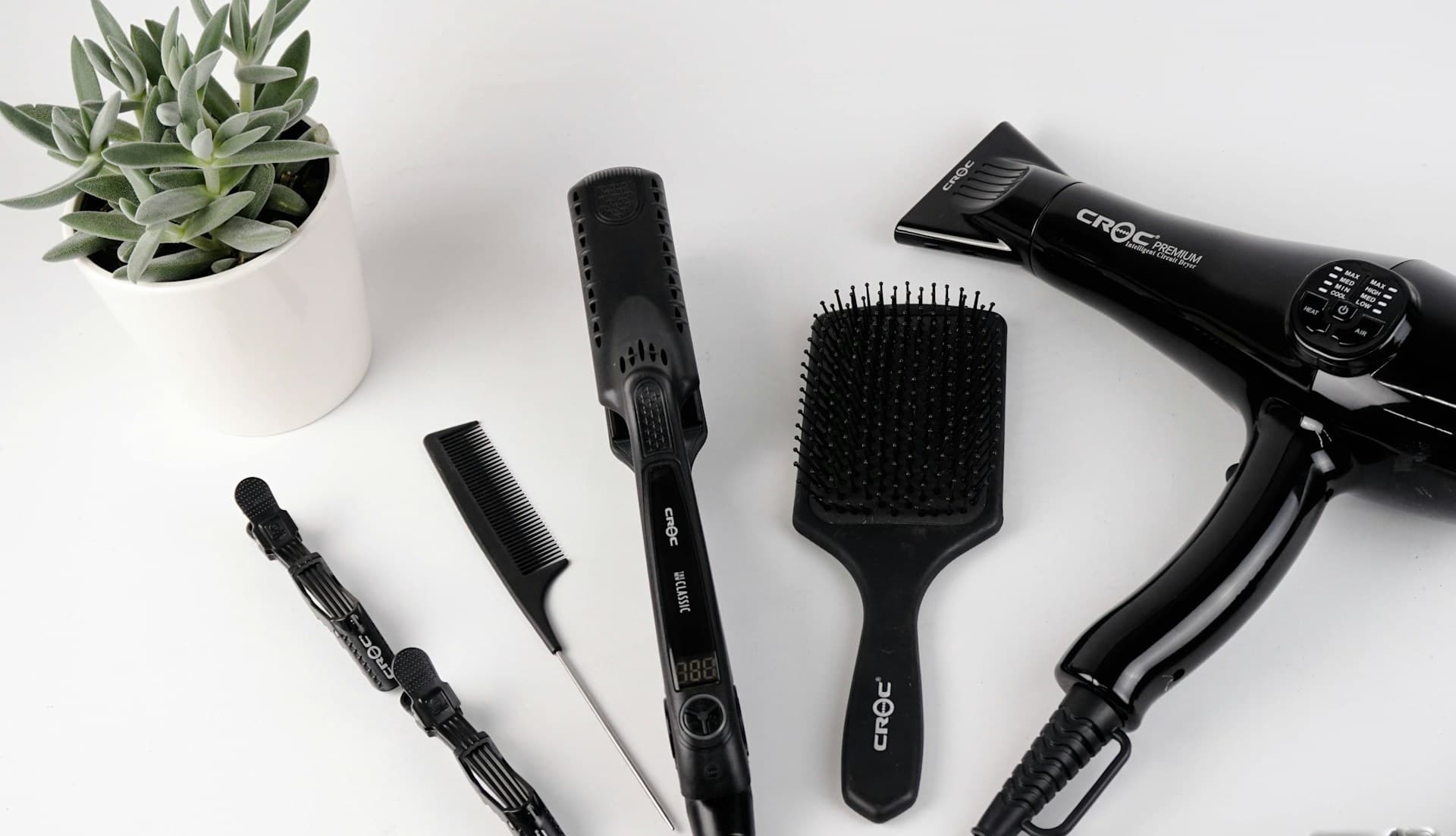
Ceramic: Even heat, good for fine to normal hair Titanium: Heats fast, stays hot, better for coarse hair Tourmaline: Emits negative ions, reduces static
The winner? Ceramic with tourmaline coating for most hair types.
The Ionic Technology Scam
"Ionic" tools claim to "seal the cuticle" and "lock in moisture."
Physics says: Ions can reduce static. That's it. They don't magically repair damage or change hair structure. A study in the Journal of Cosmetic Science found no difference in damage between ionic and regular tools⁶.
The Blow Dryer Distance Formula
MIT's aerodynamics lab calculated optimal blow-drying physics⁷:
Distance: 6 inches minimum Temperature: Medium heat Technique: Constant motion Time: Until 80% dry, finish with cool shot
The math: Damage = (Temperature² × Time) ÷ Distance
Double the distance, quarter the damage.
Alternative Styling Methods That Actually Work
Heat-Free Curls That Last
French polymer science research identified why most heatless curls fail⁸:- Hair must be 10-20% damp (not wet, not dry)
- Tension must be consistent
- Hold time relates to hair thickness (thin: 2 hours, thick: 8 hours)
- Product with hold polymer essential
- Sock curls (even tension distribution)
- Flexi-rods (consistent diameter)
- Pin curls (for shorter hair)
- Braids (for waves, not curls)
The Blow Dry That Minimizes Damage
Japanese salon research developed the "cool-warm-cool" method⁹:
- Cool air: Remove 60% moisture
- Warm air: Style while 30-40% damp
- Cool shot: Set the style
This reduces heat exposure by 70% while maintaining style longevity.
Hairelya's styling tracker helps you find the minimum heat needed for your desired style. Less heat = less damage.
The Products That Make or Break Your Style
For Hold Without Crunch
German cosmetic chemistry identified polymers that provide flexible hold¹⁰:- PVP (polyvinylpyrrolidone): Humidity resistant
- VP/VA copolymer: Flexible hold
- Polyquaternium compounds: Anti-static, smoothing
Avoid: Alcohol-heavy products (drying) and heavy oils (weigh down style)
The Humidity-Proofing Strategy
Singapore's tropical climate research center studied anti-humidity products¹¹. Winners:- Silicone serums (seal out moisture)
- Anti-humectant sprays
- Polymers that form humidity barriers
- Glycerin in humid climates (attracts more moisture)
- Salt sprays (increase frizz)
- Heavy creams (go limp)
The Damage Math Nobody Does
Let's calculate real damage:
Daily flat ironing at 400°F:- 5 minutes × 365 days = 30.4 hours of heat/year
- Equivalent to holding your hair in a 400°F oven for over a day
- 2.5 minutes × 182 days = 7.6 hours/year
- 75% less heat exposure
- Same style potential with proper products
Your Heat Styling Protocol
Pre-Style Prep
- Completely dry hair (test with cool shot)
- Apply protectant with proven ingredients
- Comb through for even distribution
- Wait 30 seconds for product to set
During Styling
- Section hair properly (smaller sections = less passes)
- Use appropriate temperature for YOUR hair
- Single pass when possible
- Keep tool moving
- Cool shot to set
Post-Style Care
- Don't touch until completely cool
- Apply light serum to ends
- Use silk/satin pillowcase
- Protect from humidity
Track your routine with Hairelya to identify the minimum heat and frequency needed for your style goals.
The Weekly Styling Schedule
Based on trichology research for maintaining style with minimal damage¹²:
Sunday: Wash, deep condition, air dry Monday: Heat style (if needed) Tuesday: Refresh with no heat Wednesday: Refresh with minimal heat Thursday: No heat touch-up Friday: Heat style (if needed) Saturday: No heat style or natural texture
Maximum: 2-3 heat styling sessions per week
The Emergency Fixes
Flat Iron Burns
If you smell burning:- Stop immediately
- Apply protein treatment
- Deep condition
- Trim if necessary
- No heat for 2 weeks minimum
Over-Dried Blow Dry
- Mist with water
- Apply leave-in conditioner
- Twist or braid while damp
- Let dry naturally
Heat Damage Assessment
Signs you've gone too far:- Ends feel rough when dry
- Hair won't hold moisture
- Styles fall out quickly
- Increased breakage
- Color fades faster
The Alternatives Nobody Talks About
Wet Setting
Old school but effective. Hair is set while wet, dried without manipulation. Lasts longer than heat styling with zero damage.Chemical Straightening/Curling
Controversial but consider: One chemical treatment every 3-4 months might cause less damage than daily heat styling.Protective Styling
Braids, twists, buns reduce daily styling needs. Your hair grows 6 inches/year whether you style it or not.The Bottom Line
Heat styling isn't evil. Excessive heat is.
Physics doesn't care about your hurry or your style goals. It will damage your hair at certain temperatures. Period.
The solution isn't no heat – it's smart heat. Right temperature, right frequency, right protection.
Your hair can look good without being fried. It just takes understanding the science instead of following the trends.
---
Want to find your perfect balance between style and hair health? Download Hairelya to track your heat styling and optimize your routine based on actual results, not guesswork.